
Warehouse and Industrial Appraisal
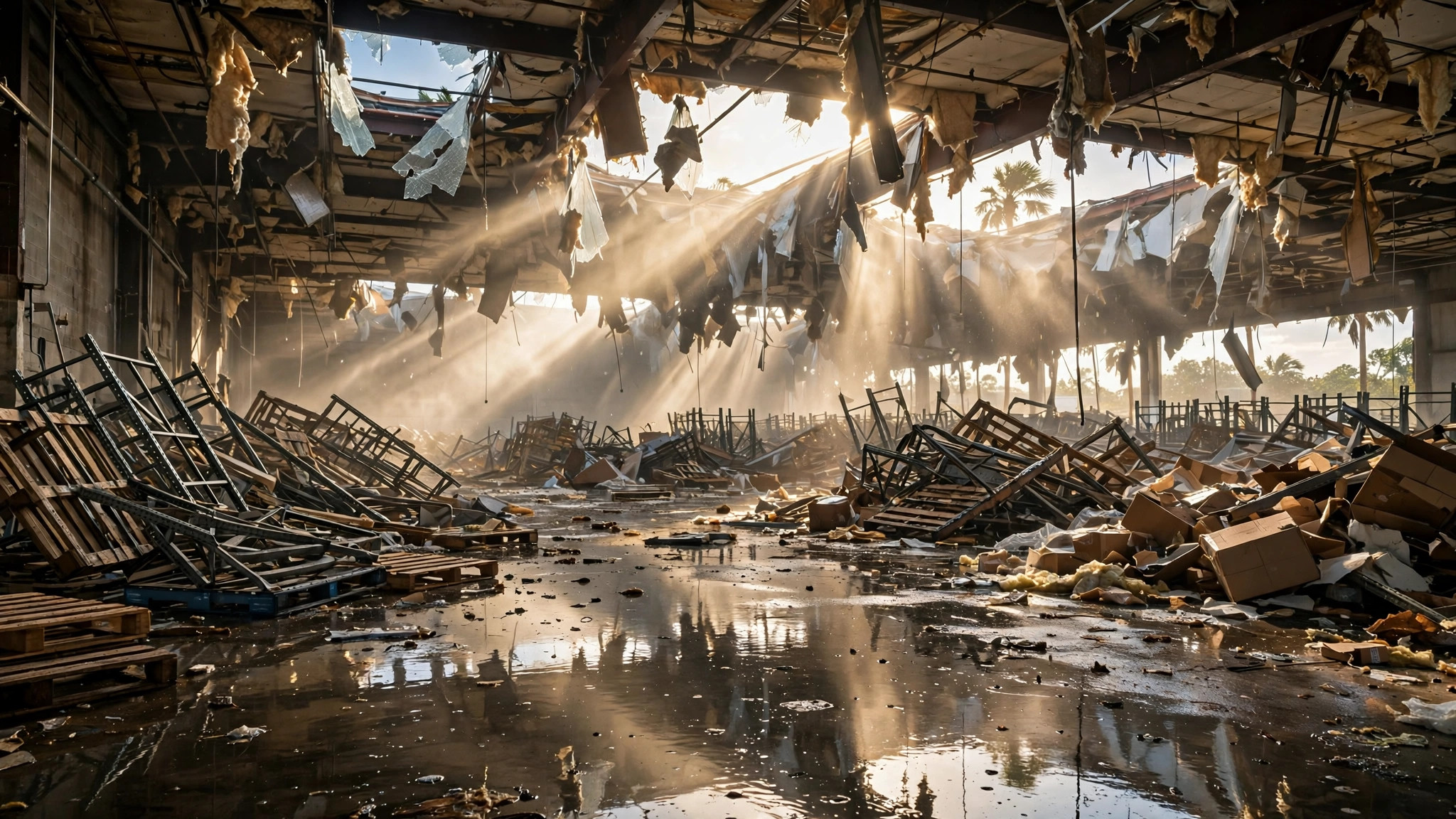
The building is part of the machine
A warehouse earns its value from clear height, floor capacity, dock access, rack layout, power, fire protection, and the ability to keep product moving. Damage to one system can idle the whole operation.
Loss Recovery Experts documents the building system by system, then ties the repair sequence to the operational loss.
Systems diagram
Structure and roof
Columns, joists, deck, roof assembly, skylights, vents, and wall panels must restore load capacity and clear height. A repair that changes either can change the building's function.
Racking and material handling
Engineered racks, anchors, uprights, beams, wire decks, conveyors, forklifts, chargers, and dock equipment need inventories, capacities, and inspection records. Replacement must match the installed system's function and code requirements.
Docks and doors
Levelers, seals, overhead doors, operators, truck restraints, canopies, and aprons affect throughput and weather protection. Damage counts should follow each dock position, not a general allowance.
Heavy power
Switchgear, transformers, busways, panels, drops, and machine connections can control the restoration schedule. Switchgear lead times are a real appraisal fact when procurement delays repair or reopening. The record should carry vendor quotations, submittal dates, delivery estimates, and temporary power costs where relevant.
Fire and life safety
Sprinklers, ESFR systems, fire pumps, alarms, egress lighting, ventilation, and hazardous material controls must be documented to the installed design and applicable code. Testing and acceptance belong in the sequence when required.
Specialty spaces
Cold storage, clean rooms, labs, production areas, dust control, process plumbing, and equipment foundations need their own construction record. A shell rate cannot price them.
Repair sequence and downtime
Industrial repairs may require rack removal, inventory relocation, shutdowns, temporary power, phased roof work, and retesting before operations resume. The physical timeline should support any business income or extra expense valuation tied to the loss.
Start with systems records
Send the policy, insurer estimate, building plans, rack layout, equipment inventory, electrical one-line drawings, fire system records, maintenance logs, vendor reports, and restoration schedule. The review prices the operation that was damaged, not an empty box.